
《114-2_ IB524》Bridging Sustainability and Industry: NSYSU Students Gain Firsthand Insight into Taiwan’s Recycling Innovation
Written by Jan Dariusz Filipp, Teaching Assistant, IBMBA
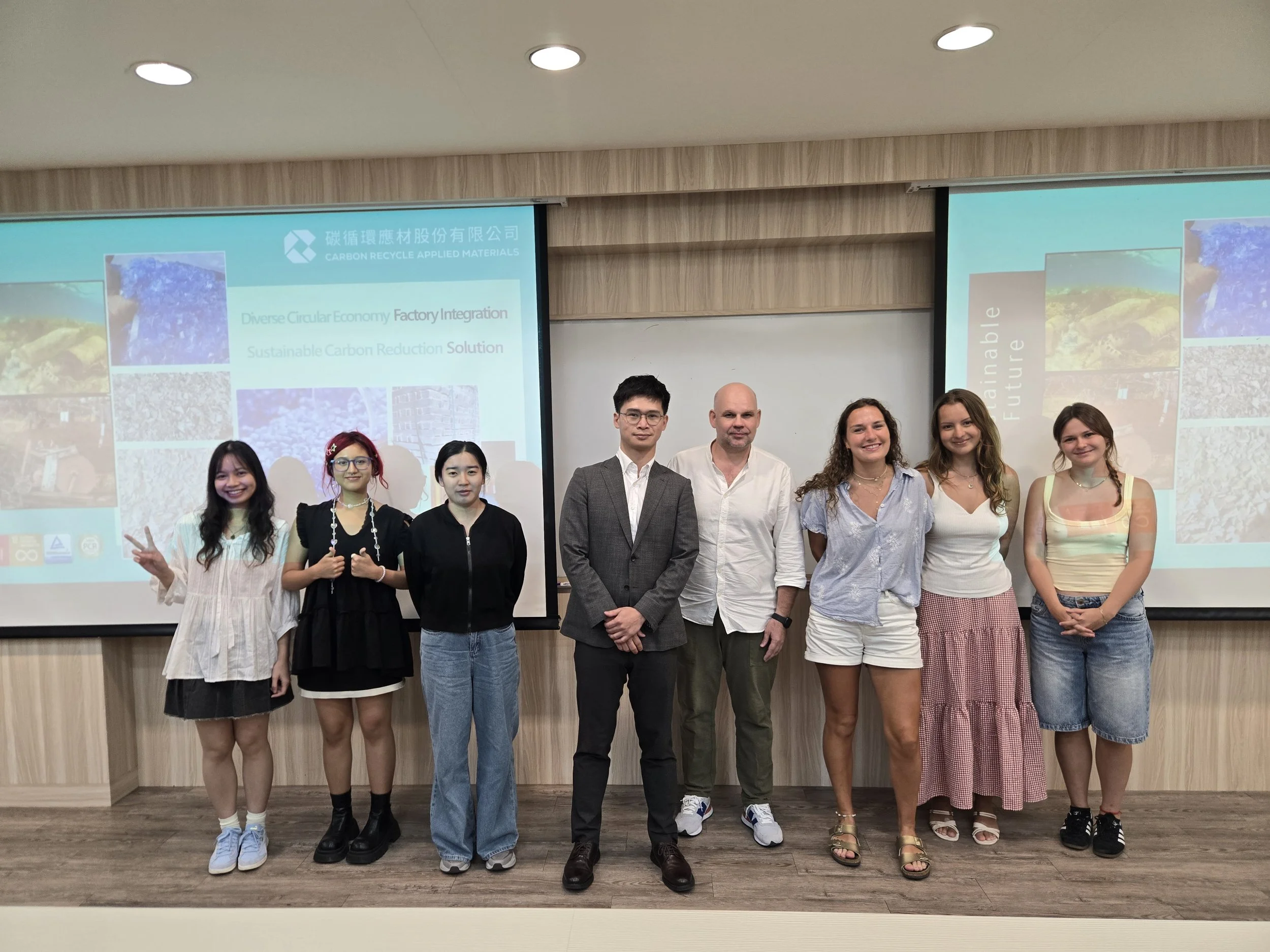
Within the framework of the Sustainability of Global Enterprise (IB524) course at National Sun Yat-sen University, students were invited to explore the practical complexities surrounding the recycling of plastic, steel, aluminium, and copper, thereby highlighting how circular economy processes operate in Taiwan through a guest lecture delivered by Willie Chen (陳映謙), an International Sales Representative from Carbon Recycle Applied Materials (CRAM). The inclusion of this recycling company within the course curriculum proved highly productive, as it strongly complemented and reinforced previous lectures on the circular economy, recycling systems, and carbon footprint reduction delivered throughout the course.
The session, hosted by Assistant Professor Ryan Brading and supported by Teaching Assistant Yanek Filipp (張元帥), provided a distinctive bridge between global business theory and industrial reality. Mr. Chen opened the lecture by outlining his professional background as both an entrepreneur and sales specialist, noting that he spent ten years living in Canada, an experience that has significantly shaped his international perspective on the green energy sector. This global outlook is central to his work at CRAM, a company characterised by a complex network of interconnected low-carbon recycling factories. Unlike traditional recycling I ntermediaries, CRAM differentiates itself through the manufacturing of its own specialised recycled materials for commercial sale, thereby offering a comprehensive and integrated sustainable carbon reduction solution.
A core component of the lecture focused on CRAM’s Post-Consumer Recycled (PCR) material management system. Mr. Chen explained how the company employs a sophisticated data-driven management framework to ensure material traceability, which serves as the foundation for maintaining quality stability across its recycling operations. Students were introduced to the meticulous sorting standards applied to recycled materials, whereby sources are categorised according to their purity and previous usage. High-purity sources, such as recycled bottles, are allocated to precision components, while mixed household materials are utilised for standard manufacturing parts, and more complex waste streams are redirected toward non-critical applications. To uphold these standards, CRAM implements a rigorous four-stage quality testing process for incoming materials, combined with strict production and shipping controls, thereby ensuring that recycled plastics are capable of meeting the same demanding mechanical and thermal performance requirements as virgin materials.
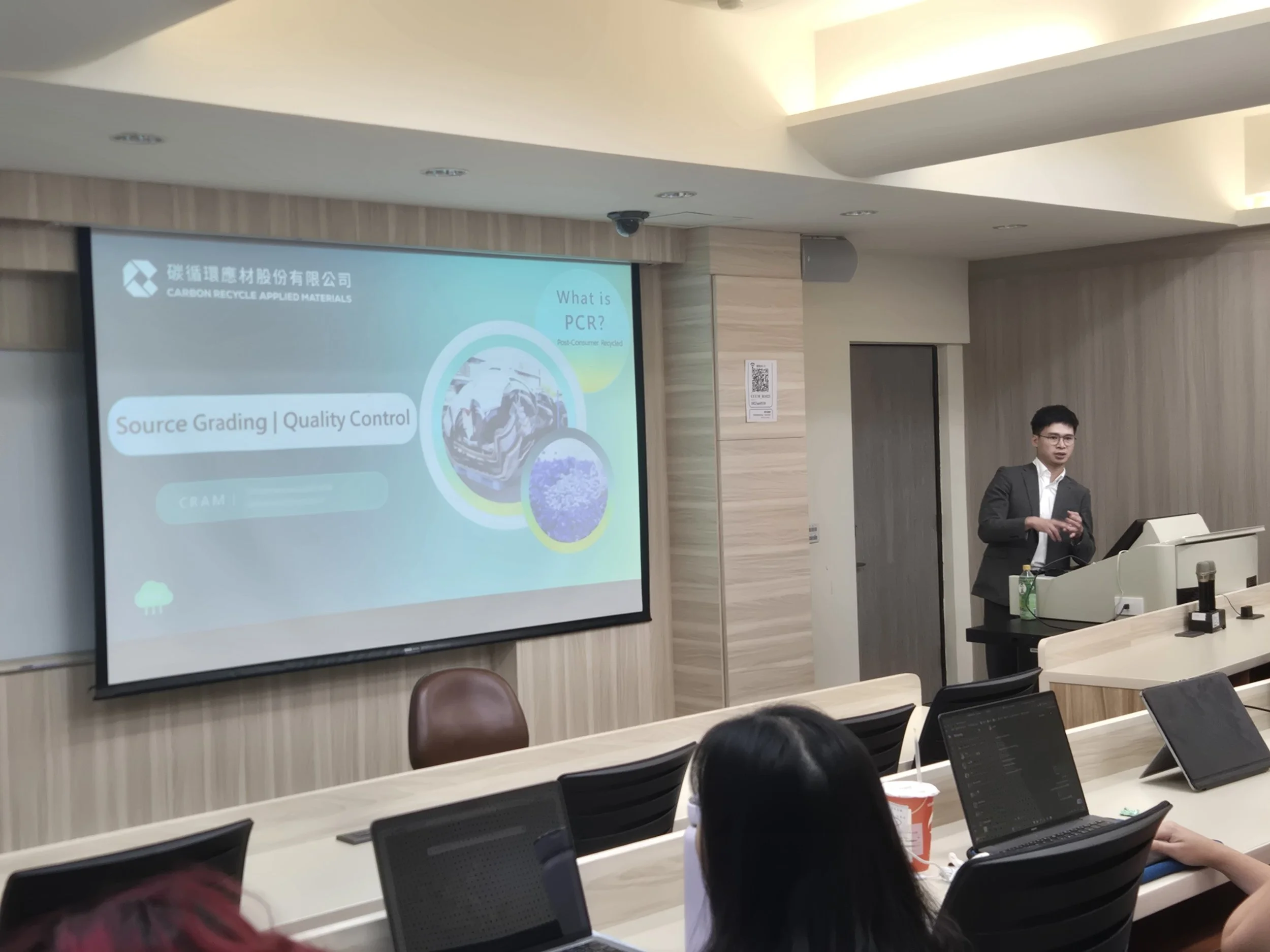
Beyond technical specifications, Mr Chen addressed the stark reality of the recycling industry, which often centres on the tension between eco-friendliness and cost control. He explained that in the real world, the drive for cost-cutting frequently dominates over concerns for quality or environmental impact. Consequently, CRAM and the broader recycling industry have had to exert substantial effort to convince customers—and the customers of those customers—to invest in recycled materials for the long-term benefit of the global environment. This candid discussion sparked significant interest among the diverse audience, which included students from France, Taiwan, Vietnam, Nepal, and Germany, who were eager to understand the operational challenges of moving toward a truly sustainable industrial model. The session concluded with a deeper appreciation for how firms like CRAM utilise integrated work order systems and physical property databases to coordinate different batches of recycled materials effectively.
For the MBA students participating in this cohort, such a guest lecture offers invaluable professional development that extends far beyond the classroom environment. By engaging directly with a practitioner who successfully navigates the friction between environmental idealism and commercial profitability, these future managers gain a realistic blueprint for implementing corporate social responsibility within contemporary global industries. The session further emphasised the importance of data-driven decision-making, supply chain transparency, and material traceability, all of which are increasingly essential competencies for leaders seeking to guide global enterprises through the ongoing green transition. Ultimately, this exposure equips students with the “language of industry” – enabling them to advocate for sustainable investments not merely as ethical responsibilities, but also as technically credible, economically viable, and strategically necessary business operations within the emerging circular economy.
Special thanks are extended to the International Office for sponsoring this event , to Professor Ryan Brading and TA Yanek Filipp for their organisation, and to Willie Chen for his insightful contribution to the curriculum.