
《114-2 IB603》PhD Candidate Shania Perdana on How Government Policies Shape Sustainability Decisions in Global Supply Chains
Written by Tina Lien (Teaching Assistant, IBMBA)
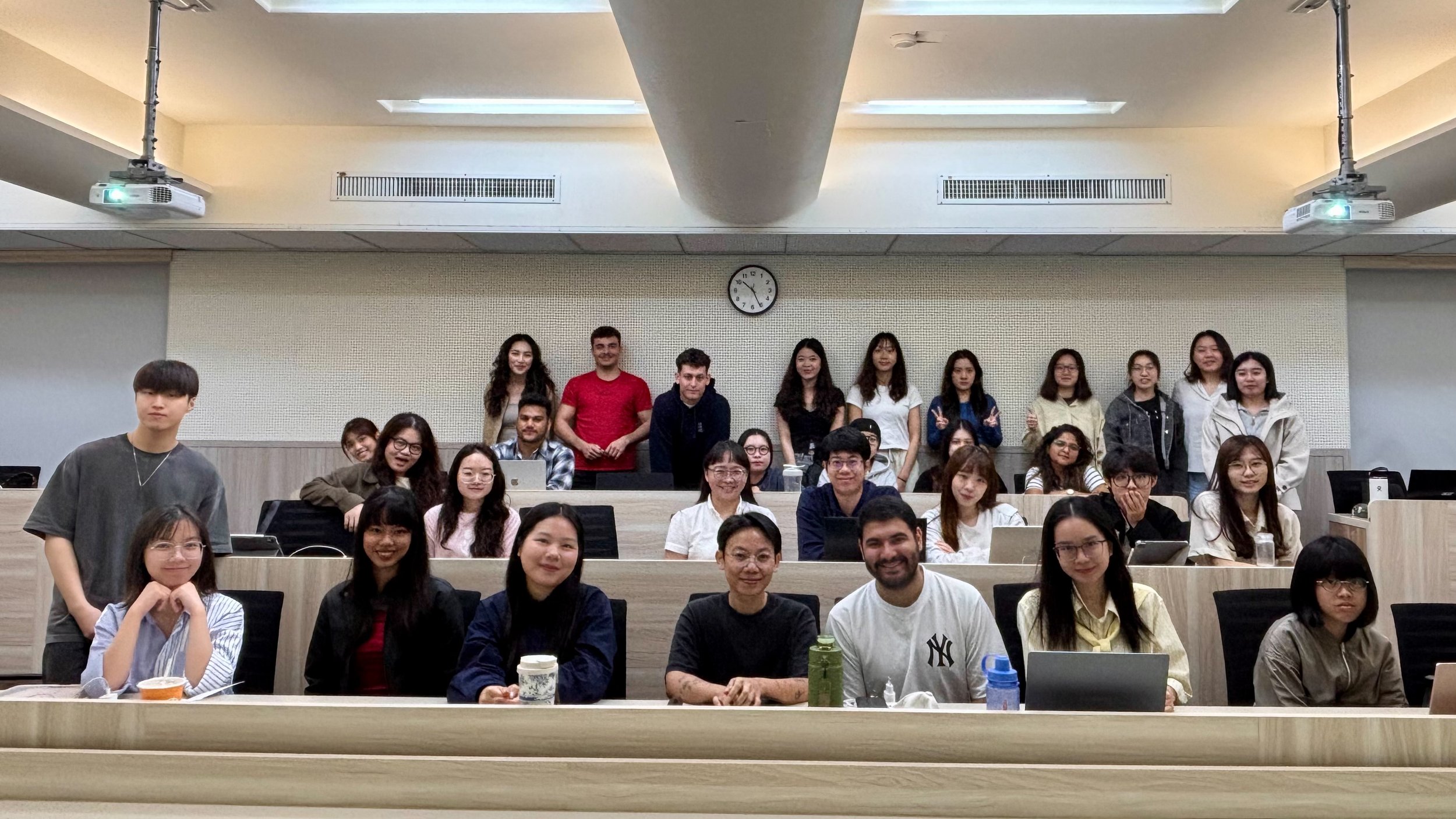
On March 18, 2026, the Global Supply Chain Management class at National Sun Yat-sen University, led by Prof. Yang, Yu-Cheng (IBMBA), hosted Shania Perdana, a PhD Candidate in the Department of Information Management, who presented her research on government intervention in cross-border supply chains and its implications for sustainability investment. The topic closely aligns with the course focus, as global supply chains are increasingly shaped by environmental regulations and public policy.
Perdana opened by addressing the rise of public environmental awareness and how it is reshaping consumer behaviour. She cited a 2024 PwC survey indicating that consumers are willing to pay about 9.7% more for environmentally friendly products. This suggests that sustainability has moved beyond a niche concern to become part of everyday market demand. She also highlighted examples such as Zara, Patagonia, TOMS, and IKEA, which have implemented practices like recycled materials, responsible production, and low-carbon logistics.
She then turned to the three studies conducted, which examine firm decision-making under different government intervention policies. Firms exporting to foreign markets must decide whether to invest in sustainable production or incur additional costs such as import tariffs. Her research demonstrates that this decision is largely determined by market size and cost conditions. In larger markets, firms are more inclined to invest because costs can be distributed across a greater demand. In smaller markets, paying tariffs may prove more practical. She also noted that policies such as subsidies and taxes can significantly influence these decisions.
Perdana’s dissertation further explores how local and foreign governments interact. For firms operating across countries, different policies may apply simultaneously. Whether these policies are aligned can shape firm decisions. When governments pair regulatory measures with supportive policies, firms are more likely to invest in sustainability.
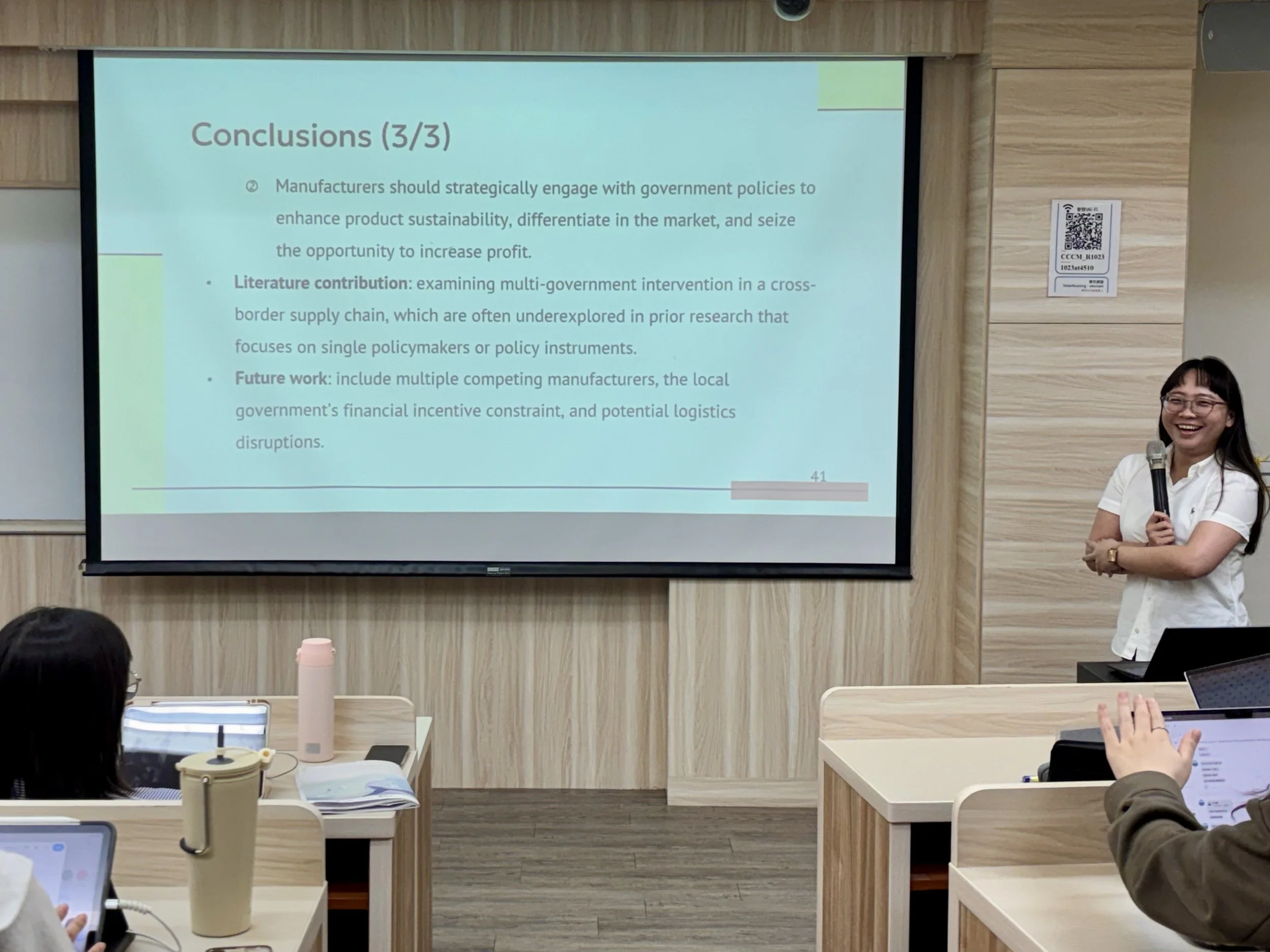


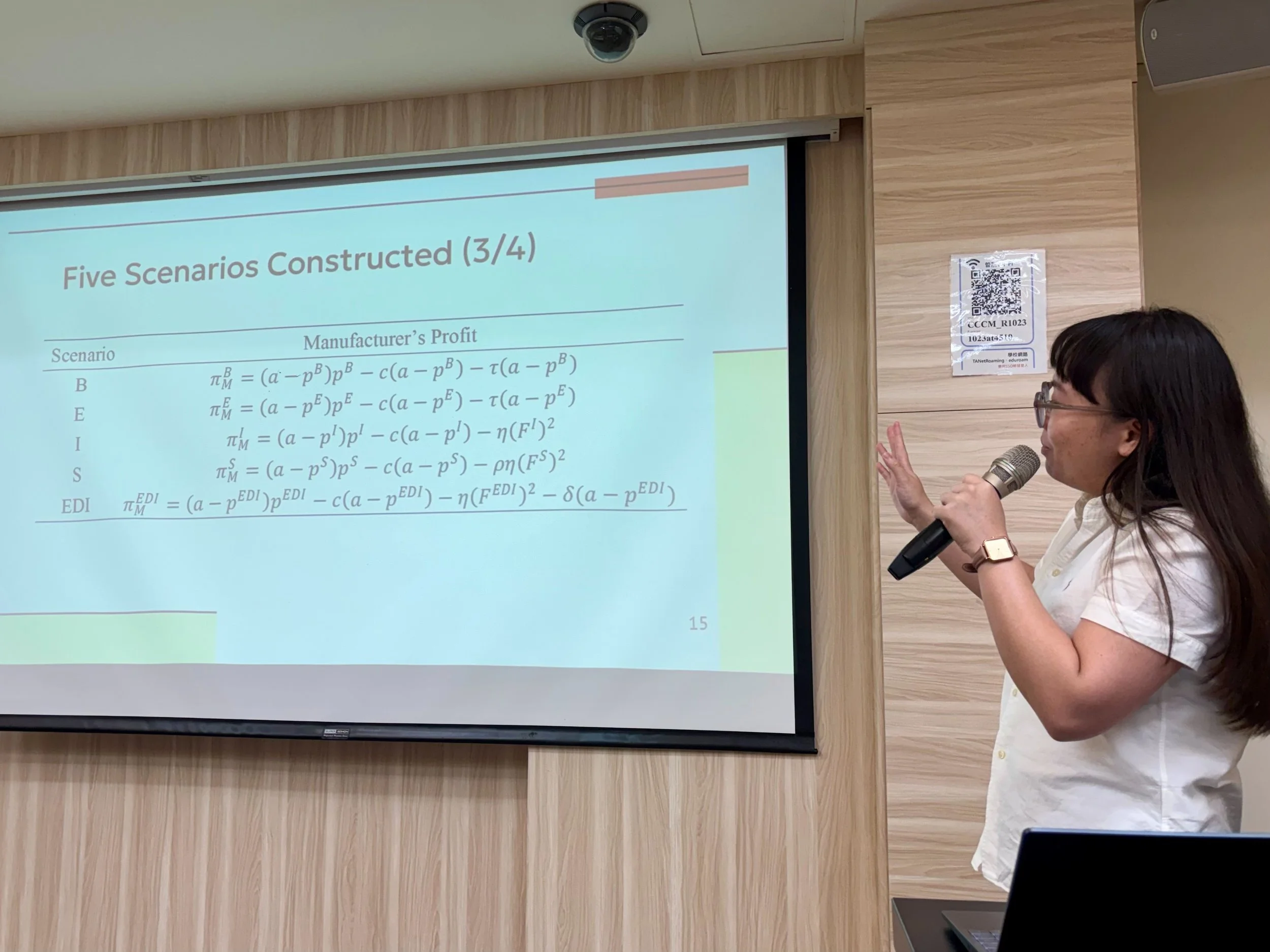
In addition to her research, Perdana reflected on her experience with the PhD publication process. She explained that her work underwent several rounds of revision based on reviewers’ comments, which helped refine the structure and clarity of the study. This offered students a more concrete understanding of how academic research is developed. The session also prompted further discussion in class. Students inquired how such research establishes its assumptions and whether firms could first pay tariffs and invest later. Perdana responded that her model is structured sequentially. Different problem statements and assumptions would necessitate different types of models, which were beyond the scope of this study.
For MBA in international business students, the lecture provided a practical way to connect classroom concepts with real-world issues. It underscored that global supply chain decisions extend beyond cost and efficiency to encompass government policies and sustainability requirements.